


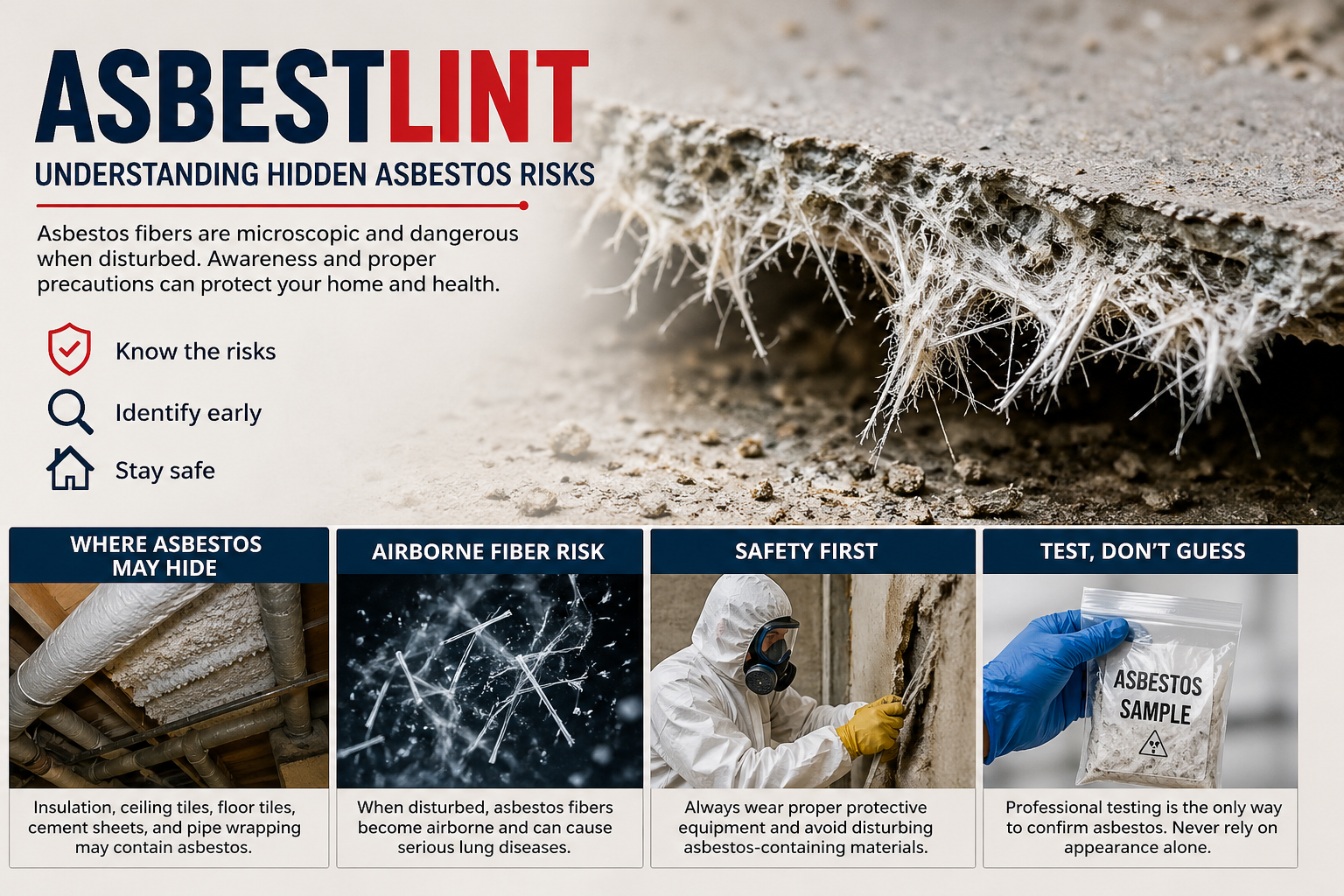
Most people think their homes are safe until a small renovation, crack, or dust release tells a different story. Hidden asbestos can sit quietly for years, only becoming dangerous when disturbed. This is where AsbestLINT comes in, helping people understand invisible threats before they become serious health risks. Whether you’re a homeowner, DIY renovator, or just curious about indoor safety, knowing how asbestos behaves and how to handle it properly can protect your family and your space.
What Is AsbestLINT and Why It Matters Today
AsbestLINT refers to a modern awareness approach that focuses on detecting and understanding asbestos-related risks in everyday environments. Unlike older methods that relied heavily on professional inspections only, this concept emphasizes awareness, early identification, and safer decision-making at the user level.
Asbestos was widely used in construction materials like insulation, ceiling tiles, and flooring. While it was once valued for its durability and heat resistance, we now know that damaged asbestos releases microscopic fibers into the air. These fibers create a serious airborne fiber risk when inhaled over time.
Today, many older homes still contain these materials. The problem is not always visible. A wall may look fine, but drilling, sanding, or breaking it can release harmful particles. This is why understanding asbestos safety is no longer optional, it’s essential.
For example, a homeowner renovating a 1980s kitchen might unknowingly disturb old insulation behind cabinets. Without awareness, that simple project can turn into a health hazard. AsbestLINT helps people recognize these hidden dangers before taking action.
Where Asbestos Risks Appear in Real Life
Asbestos isn’t just found in industrial buildings; it can exist in everyday residential spaces. Knowing where to look is the first step toward prevention.
Common areas include old roofing sheets, pipe insulation, vinyl floor tiles, and textured wall coatings. These materials may seem harmless when intact, but damage or aging can lead to indoor contamination.
Imagine a DIY enthusiast removing old floor tiles in a bathroom. The tiles break easily, creating dust. If those tiles contain asbestos, the dust may carry fibers into the air, increasing exposure risk. Without proper precautions, this situation becomes dangerous.
Another example is attic insulation. Many older homes used asbestos-based insulation for temperature control. If someone enters the attic and disturbs it while installing wiring or storage, fibers can spread quickly.
Even minor repairs can trigger risks. Drilling into a ceiling to install a light fixture might release particles if the material contains asbestos. These everyday scenarios highlight why awareness matters more than ever.
By recognizing these real-life situations, people can make safer choices and avoid unnecessary exposure.
How to Detect and Handle Asbestos Safely
Detecting asbestos doesn’t always require complex tools, but it does require caution and smart decision-making. The key is to avoid direct disturbance until you are sure about the material.
Start by identifying the age of your home or building. Properties built before the early 2000s are more likely to contain asbestos materials. If you suspect something, avoid touching or breaking it immediately.
A safe step-by-step approach can make a big difference. First, observe the material visually without disturbing it. Look for signs like brittle texture, unusual layering, or old insulation wrapping. Second, limit access to the area. Keep children and pets away to reduce accidental exposure.
Third, consider testing. Professional asbestos testing kits or certified inspectors can confirm the presence of fibers. This step is crucial before any renovation work begins.
If asbestos is confirmed, do not attempt removal yourself unless properly trained. Handling it incorrectly can worsen the situation. Instead, hire licensed professionals who follow strict safety procedures.
For minor situations, sealing or covering the material may be safer than removing it. This method prevents fibers from becoming airborne and reduces risk.
Practical safety habits also help. Always wear protective masks during renovation, ensure proper ventilation, and clean dust using damp methods instead of dry sweeping. These simple steps reduce the spread of airborne particles.
AsbestLINT vs Traditional Awareness Methods
Traditional asbestos awareness focused mainly on expert inspections and post-discovery solutions. While effective, this approach often came too late after exposure had already occurred.
AsbestLINT shifts the focus toward early awareness and proactive behavior. Instead of waiting for professionals, it encourages individuals to recognize warning signs and take preventive action.
For instance, in the past, a homeowner might start renovation work without considering asbestos. Only after symptoms or contamination would experts be called. Today, with better awareness, that same homeowner can pause, assess risks, and seek testing before starting.
Another key difference is accessibility. Traditional methods required specialized knowledge, making it harder for beginners to understand risks. Modern awareness simplifies information, making it easier for homeowners and DIY users to stay informed.
Additionally, AsbestLINT promotes safer decision-making rather than fear. It doesn’t suggest avoiding all renovations, it teaches how to approach them responsibly.
This shift empowers individuals. Instead of relying entirely on experts, people become active participants in maintaining their own safety.
Conclusion
Understanding asbestos risks is no longer just a professional concern, it’s a personal responsibility. With older buildings still in use and DIY culture growing, awareness plays a critical role in preventing exposure. AsbestLINT provides a practical way to recognize hidden dangers, take preventive steps, and handle situations safely. By staying informed, observing, and making smart decisions, you can protect your home and your health without unnecessary risk.
FAQs
1. What is AsbestLINT in simple terms?
It is an awareness approach that helps people identify and understand asbestos risks in everyday environments.
2. How can I tell if my home has asbestos?
Check the age of your home and look for old materials like insulation or tiles, but confirm through professional testing.
3. Is asbestos dangerous if left untouched?
Generally, it is less risky when undisturbed, but damage or wear can release harmful fibers into the air.
4. Can I remove asbestos myself?
It is not recommended unless you are trained. Professional removal ensures safety and proper handling.
5. What should I do before starting renovation in an old house?
Inspect materials carefully, avoid disturbing them, and consider testing to ensure there is no asbestos present.
