


Introduction
Modern kitchens are becoming smarter, faster, and more energy-efficient, which is why technologies like Microwey are gaining popularity. Unlike traditional microwave ovens, Microwey focuses on intelligent heating, smart cooking features, and improved energy efficiency to make everyday cooking easier and more convenient. From busy professionals to modern families, many people now prefer smart kitchen appliances that save time while delivering better cooking results.
What Is Microwey and Why Is It Becoming Popular?
Modern kitchens are changing quickly, and people now expect appliances to save both time and energy. This is where Microwey is gaining attention. Microwey refers to a smart microwave technology concept designed to make cooking faster, easier, and more efficient for everyday users. Instead of simply reheating food like older microwave ovens, Microwey focuses on intelligent heating, energy-efficient cooking, and modern kitchen convenience.
Many homeowners and busy professionals prefer appliances that simplify their daily routines. Students living in apartments also want compact cooking solutions that work quickly without increasing electricity costs. Because of these needs, smart microwave systems are becoming more popular in modern homes.
Unlike traditional microwave ovens that mainly rely on manual settings, Microwey introduces smarter features such as automatic heating adjustments, sensor-based cooking, and intelligent temperature control. These improvements help users avoid overcooked meals, uneven heating, and wasted energy.
Modern families are also becoming more interested in smart kitchen solutions because they fit perfectly into today’s fast-moving lifestyle. Whether someone is heating leftovers after work or preparing a quick dinner for the family, Microwey technology aims to make the process smoother and more reliable.
How Microwey Improves Modern Cooking Experience
Cooking convenience is one of the biggest reasons why smart microwave appliances are growing in popularity. Traditional cooking methods often require constant attention, but Microwey technology is designed to reduce that effort.
For example, imagine a student returning home after classes and needing a quick meal. Instead of spending thirty minutes preparing food on a stove, they can use a smart microwave appliance to heat a meal evenly within minutes. The appliance can automatically adjust power levels and heating time based on the food type.
Busy professionals also benefit from faster cooking systems. Many people work long hours and do not want complicated cooking routines at the end of the day. A microwave cooking system with intelligent features can quickly warm soups, prepare frozen meals, steam vegetables, or even cook snacks with minimal supervision.
Microwey also improves cooking consistency. One common problem with older microwave ovens is uneven heating. Food may become extremely hot on one side while remaining cold in another area. Smart heating systems solve this issue by distributing heat more effectively.
Another major improvement is convenience for families. Parents can prepare meals faster while still maintaining food quality. In many households, modern kitchen technology helps reduce stress during busy mornings and evenings.
Smart Features That Make Microwey Different from Traditional Microwaves
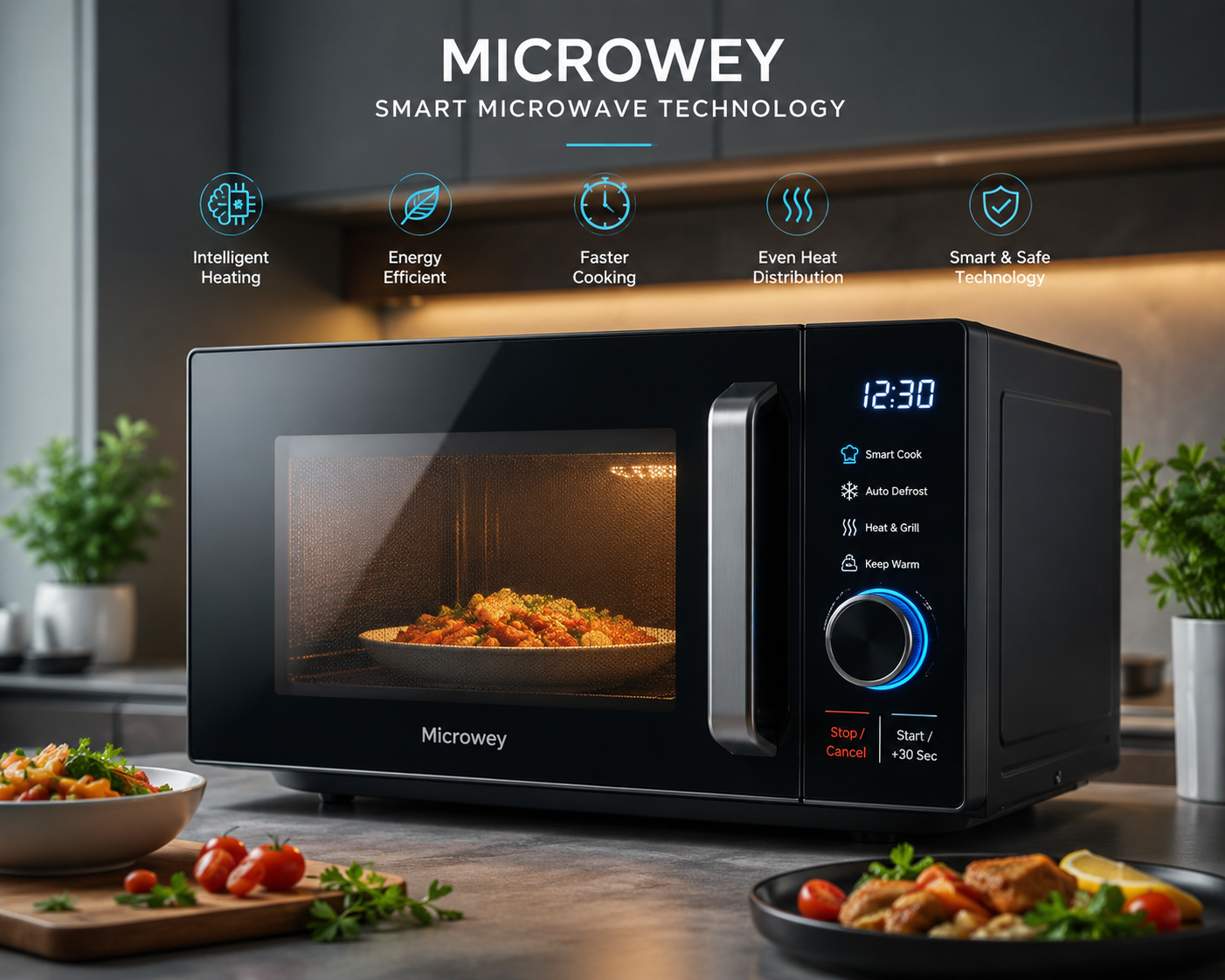
The biggest difference between Microwey and conventional microwave ovens is the use of intelligent heating technology. Modern microwave systems now include advanced features that improve both efficiency and user experience.
Intelligent Heating and Smart Sensors
One of the most useful features in Microwey systems is sensor-based cooking. Smart sensors detect moisture levels, food temperature, and steam output during cooking. The appliance then adjusts cooking power automatically.
For example, if someone is reheating pasta, the microwave cooking system can detect when the food is properly heated and stop automatically. This prevents dry or overheated meals.
Smart sensors are especially helpful for beginners who may not know the exact cooking times. Instead of guessing, users can rely on automatic cooking adjustments for better results.
Energy Efficiency and Faster Cooking
Energy-efficient cooking is becoming increasingly important because electricity costs continue to rise in many countries. Traditional ovens usually consume more power and require longer cooking times. Smart microwave appliances reduce both cooking duration and energy usage.
Microwey systems often heat food much faster because they use optimized power control. Faster cooking means less electricity consumption overall.
For example, heating a bowl of soup in a standard oven could take fifteen minutes, while a smart microwave appliance may complete the task in only a few minutes. Over time, this can help households save energy.
Many modern kitchen appliances now include eco-friendly modes that further improve efficiency. These features appeal to environmentally conscious users who want practical energy-saving solutions.
Even Heat Distribution and Food Quality
Food quality matters just as much as speed. Older microwave ovens sometimes create uneven textures that negatively affect taste. Smart heating technology improves heat distribution to maintain better flavor and texture.
For instance, reheated pizza often becomes either too soft or too dry in basic microwaves. Microwey systems are designed to distribute heat more evenly, helping food retain a more natural texture.
Some advanced microwave cooking systems even combine grilling, steaming, and convection-style heating to improve cooking flexibility. This allows users to prepare a wider range of meals with a single appliance.
Real-Life Uses of Microwey in Everyday Kitchens
Microwey technology fits naturally into daily life because it supports many practical cooking tasks.
In family kitchens, smart microwave systems help parents prepare quick breakfasts before school or work. Heating milk, warming sandwiches, or preparing oatmeal becomes much faster.
Students often use microwave cooking systems for instant meals, noodles, frozen snacks, and reheated leftovers. Since many student apartments have limited kitchen space, compact smart appliances provide an efficient solution.
Busy professionals benefit from intelligent heating technology during lunch breaks or late evenings. Instead of ordering expensive takeout meals every day, they can prepare quick homemade dishes more easily.
Modern families also use smart kitchen solutions for healthier cooking. Steamed vegetables, low-oil meals, and portion-controlled reheating can support better eating habits.
Microwey systems may also connect with digital kitchen ecosystems in smart homes. Some appliances now support app controls, preset cooking programs, and voice assistant compatibility for added convenience.
Microwey vs Traditional Microwave Ovens
Traditional microwave ovens mainly focus on basic reheating functions. Users manually select cooking times and power levels, often leading to inconsistent results.
Microwey systems introduce a more intelligent experience. Smart sensors, automatic cooking adjustments, and energy optimization create a smoother process for users who want reliable performance.
Another major difference is efficiency. Conventional microwaves may waste energy because they operate at fixed power settings. Smart microwave appliances can optimize heating based on food type and quantity.
User experience is also significantly improved. Traditional microwave ovens may require trial and error, especially when cooking unfamiliar foods. Microwey systems simplify the process with automatic settings and guided controls.
Additionally, modern kitchen technology focuses heavily on design and convenience. Smart microwave systems often feature touch displays, programmable menus, and modern aesthetics that match contemporary kitchens.
Why Smart Kitchen Appliances Are Changing Modern Lifestyle
Technology is transforming nearly every part of home life, and kitchens are no exception. People increasingly prefer appliances that save time, improve convenience, and reduce unnecessary effort.
Smart kitchen solutions support modern lifestyles because they align with the needs of fast-paced living. Many families no longer have hours available for traditional cooking methods every day.
Intelligent heating technology allows users to prepare meals quickly while still maintaining acceptable food quality. This balance between convenience and efficiency is one of the biggest reasons smart appliances continue growing in popularity.
Modern kitchen technology also supports energy-conscious households. As electricity prices increase, energy-efficient cooking systems become more valuable.
Another important factor is accessibility. Beginners who lack cooking experience can still prepare meals successfully using automatic cooking programs and sensor-based systems.
The combination of convenience, speed, energy savings, and improved usability makes Microwey-style appliances highly attractive for modern homes.
Final Thoughts: Is Microwey Worth Using in Modern Homes?
Microwey represents the growing shift toward intelligent kitchen technology and smarter cooking experiences. Instead of functioning as a simple reheating appliance, modern microwave systems now focus on convenience, efficiency, and improved food quality.
For homeowners, students, busy professionals, and modern families, smart microwave appliances offer practical advantages in daily life. Faster cooking, lower energy consumption, automatic heating adjustments, and better heat distribution all contribute to a more convenient kitchen experience.
Although traditional microwave ovens still remain useful, intelligent heating systems provide a noticeable improvement in usability and efficiency. As smart home technology continues evolving, appliances like Microwey are likely to become even more common in future kitchens.
For anyone seeking a faster, smarter, and more energy-efficient cooking solution, Microwey technology is certainly worth exploring.
FAQs
1. What is Microwey?
Microwey refers to a smart microwave technology concept focused on intelligent heating, faster cooking, and energy-efficient kitchen performance.
2. How is Microwey different from traditional microwave ovens?
Microwey systems use smart sensors, automatic heating controls, and improved heat distribution, while traditional microwaves mainly rely on manual settings.
3. Does Microwey help save electricity?
Yes, energy-efficient cooking systems can reduce cooking time and optimize power usage, helping households lower electricity consumption.
4. Can beginners use smart microwave appliances easily?
Yes, most smart microwave systems are designed with automatic cooking programs and user-friendly controls that simplify cooking for beginners.
5. Are smart microwave appliances suitable for modern families?
Absolutely. Smart kitchen solutions help families prepare meals faster, improve convenience, and support busy daily routines.
