


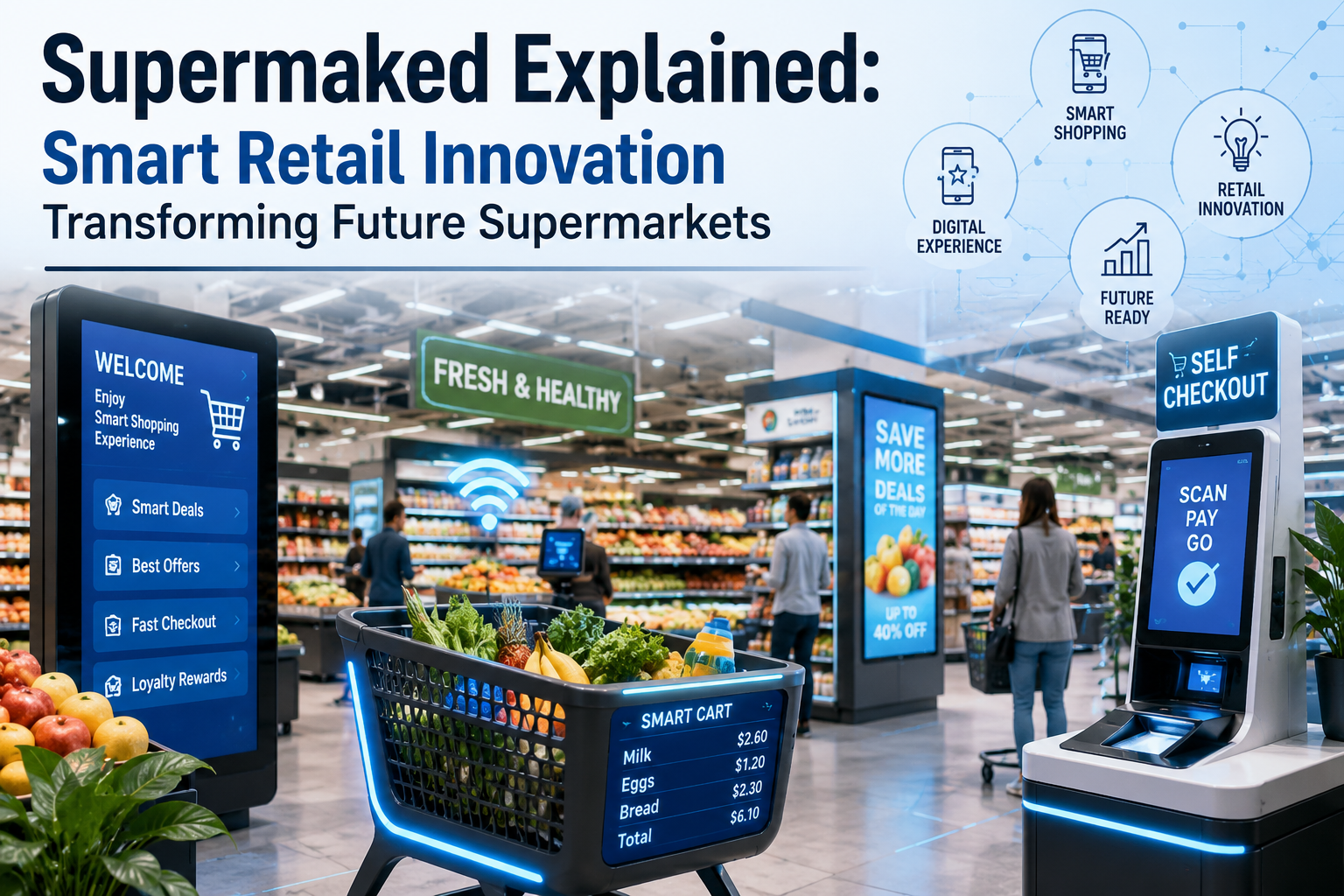
Modern retail is changing faster than ever before. Customers no longer visit stores only to purchase products because shopping has become an experience shaped by technology, convenience, and personalized services. Businesses across the supermarket industry are adapting to digital transformation, smarter inventory systems, and data-driven customer engagement strategies. This shift has introduced new concepts like Supermaked, which reflects the growing movement toward retail modernization and future-ready shopping systems.
Retail businesses now focus on improving efficiency while creating better experiences for customers. From digital payments to automated stock management, supermarkets are using advanced systems to remain competitive in a rapidly evolving market. Understanding Supermaked helps business professionals, retail readers, and supermarket industry experts recognize how innovation is shaping the future of shopping.
What Is Supermaked and Why Is It Getting Attention?
Supermaked represents the idea of modern supermarket evolution, where technology, customer convenience, and retail innovation work together to improve shopping experiences. Traditional stores mainly focused on selling products, but modern retail environments emphasize efficiency, personalization, and operational intelligence. Businesses are investing heavily in smarter retail systems because customers expect faster services, easier navigation, and digital convenience throughout their shopping journey.
The growing attention around Supermaked also reflects changing consumer behavior. People increasingly prefer stores that offer mobile payments, self-checkout systems, personalized promotions, and accurate inventory availability. Retail businesses recognize that technology-driven improvements strengthen customer loyalty while improving profitability. As competition increases within the shopping industry, supermarkets adopting smarter systems position themselves more effectively for future growth.
How Modern Technology Is Changing Supermarket Systems
Technology has transformed supermarkets into highly organized operational environments. Advanced software solutions help stores manage inventory levels, forecast customer demand, and monitor purchasing patterns. Retail managers use digital analytics tools to identify customer preferences and improve product placement strategies. These technological improvements help businesses reduce waste, increase operational efficiency, and create smoother shopping experiences.
Artificial intelligence and automation continue expanding their role in supermarket management. Smart inventory tracking systems automatically update stock availability while predictive analytics improve supply chain decisions. Digital shelf management and automated pricing tools also reduce manual workload for employees. These improvements allow supermarket businesses to focus more attention on customer satisfaction while maintaining operational performance.
Smart Shopping Experience and Retail Innovation
Customers increasingly expect shopping experiences that are convenient, personalized, and time-efficient. Smart retail systems improve customer journeys through digital tools that simplify product discovery, checkout processes, and payment options. Supermarkets investing in customer-focused technology often see stronger engagement because shoppers value convenience alongside product quality and pricing.
Retail innovation also creates opportunities for businesses to strengthen customer relationships. Mobile applications, loyalty systems, and personalized offers improve long-term customer retention strategies. Smart retail environments can recommend products based on shopping history, while digital support systems assist customers more efficiently. These developments demonstrate how Supermaked aligns with future retail trends focused on convenience and intelligent service delivery.
Digital Shopping Trends
Digital shopping trends continue to reshape customer expectations in supermarkets worldwide. Mobile payment systems, online ordering integration, and digital loyalty rewards programs improve convenience while reducing shopping friction. Customers increasingly prefer businesses offering flexible shopping experiences that combine online and physical store capabilities.
Retail businesses also analyze customer data to improve shopping experiences. Digital behavior tracking allows businesses to optimize store layouts, improve promotions, and enhance product recommendations. These trends demonstrate how technology creates stronger connections between retailers and consumers.
Inventory and Retail Operations
Inventory management remains one of the most important elements within supermarket operations. Traditional inventory systems often relied heavily on manual tracking, which increased errors and operational inefficiencies. Smart retail technology improves accuracy through automated inventory monitoring and predictive stock management.
Advanced inventory systems help supermarkets reduce overstock problems and prevent product shortages. Businesses can monitor supply chain performance more effectively while improving operational planning. Better inventory visibility creates cost savings and improves customer satisfaction because products remain consistently available.
Future Retail Technology
Future retail technology continues to introduce new opportunities for supermarkets to improve operations and customer experiences. Artificial intelligence, machine learning, and automation tools increasingly support decision-making across retail businesses. These technologies improve forecasting accuracy and operational efficiency.
Emerging technologies such as cashier-free checkout systems and smart shopping carts may become more common in modern retail environments. Businesses investing in retail technology today prepare themselves for long-term competitiveness. Innovation remains a key driver shaping supermarket evolution worldwide.
Why Supermarkets Are Moving Toward Smarter Systems
Modern supermarkets face increasing pressure to improve operational efficiency while meeting higher customer expectations. Traditional management methods often struggle to support growing retail complexity. Smarter systems provide businesses with better visibility into customer behavior, inventory performance, and operational workflows. These improvements create stronger decision-making capabilities and support long-term growth strategies.
Customer convenience also drives investment in retail technology. Faster checkouts, digital payment methods, and personalized shopping experiences improve satisfaction levels while strengthening brand loyalty. Businesses adopting smarter retail systems often gain competitive advantages because customers increasingly choose convenience-oriented shopping environments. Supermaked reflects this larger movement toward retail modernization.
Supermaked vs Traditional Shopping Models
Traditional shopping models focused heavily on product availability and physical store presence. While those factors remain important, modern retail increasingly prioritizes customer experience, operational intelligence, and digital integration. Supermaked reflects a more advanced retail approach where technology supports better service delivery and business efficiency.
Several differences separate traditional and modern supermarket systems:
- Smart inventory monitoring replaces manual stock tracking.
- Digital payment systems improve checkout speed.
- Customer analytics strengthen personalization strategies.
Businesses moving toward smarter retail systems often improve both operational performance and customer satisfaction. These advantages help supermarkets remain competitive as shopping expectations continue evolving.
The Future of Retail and Customer Experience
The future of retail will likely involve stronger integration between technology and physical shopping environments. Businesses increasingly invest in systems that improve convenience while strengthening customer relationships. Artificial intelligence, predictive analytics, and automation technologies will continue shaping retail experiences in the coming years.
Customer expectations will also continue evolving alongside technological innovation. Businesses capable of adapting quickly may build stronger market positions and customer loyalty. Supermaked represents more than supermarket technology because it reflects a broader retail transformation focused on efficiency, convenience, and future readiness.
Final Thoughts: Understanding Supermaked and Retail Evolution
Supermaked highlights the growing importance of innovation within the supermarket industry. Retail businesses increasingly depend on technology to improve customer satisfaction, operational efficiency, and long-term competitiveness. Smart shopping systems, automation tools, and customer-focused technologies continue to reshape how supermarkets operate and serve consumers.
The future of retail depends heavily on adaptability and innovation. Businesses embracing smarter systems position themselves more effectively within rapidly changing markets. Understanding Supermaked provides valuable insight into future retail trends and the continuing evolution of shopping experiences worldwide.
FAQs
1. What does Supermaked mean?
Supermaked represents the modern supermarket transformation driven by retail innovation and technology adoption. It focuses on improving shopping convenience, operational efficiency, and customer experience.
2. How does technology improve supermarkets?
Technology improves inventory management, checkout processes, and customer engagement systems. These improvements create smoother shopping experiences and stronger operational performance.
3. Why are supermarkets investing in smart systems?
Supermarkets invest in smart systems to improve efficiency and meet changing customer expectations. Digital tools help businesses remain competitive within evolving retail markets.
4. What are examples of retail innovation?
Examples include self-checkout systems, mobile payments, automated inventory tracking, and customer loyalty technologies. These innovations improve both business operations and shopping experiences.
5. What is the future of supermarket technology?
Future supermarket technology will likely include greater automation, predictive analytics, and artificial intelligence integration. Businesses adopting innovation early may strengthen long-term growth opportunities.
