


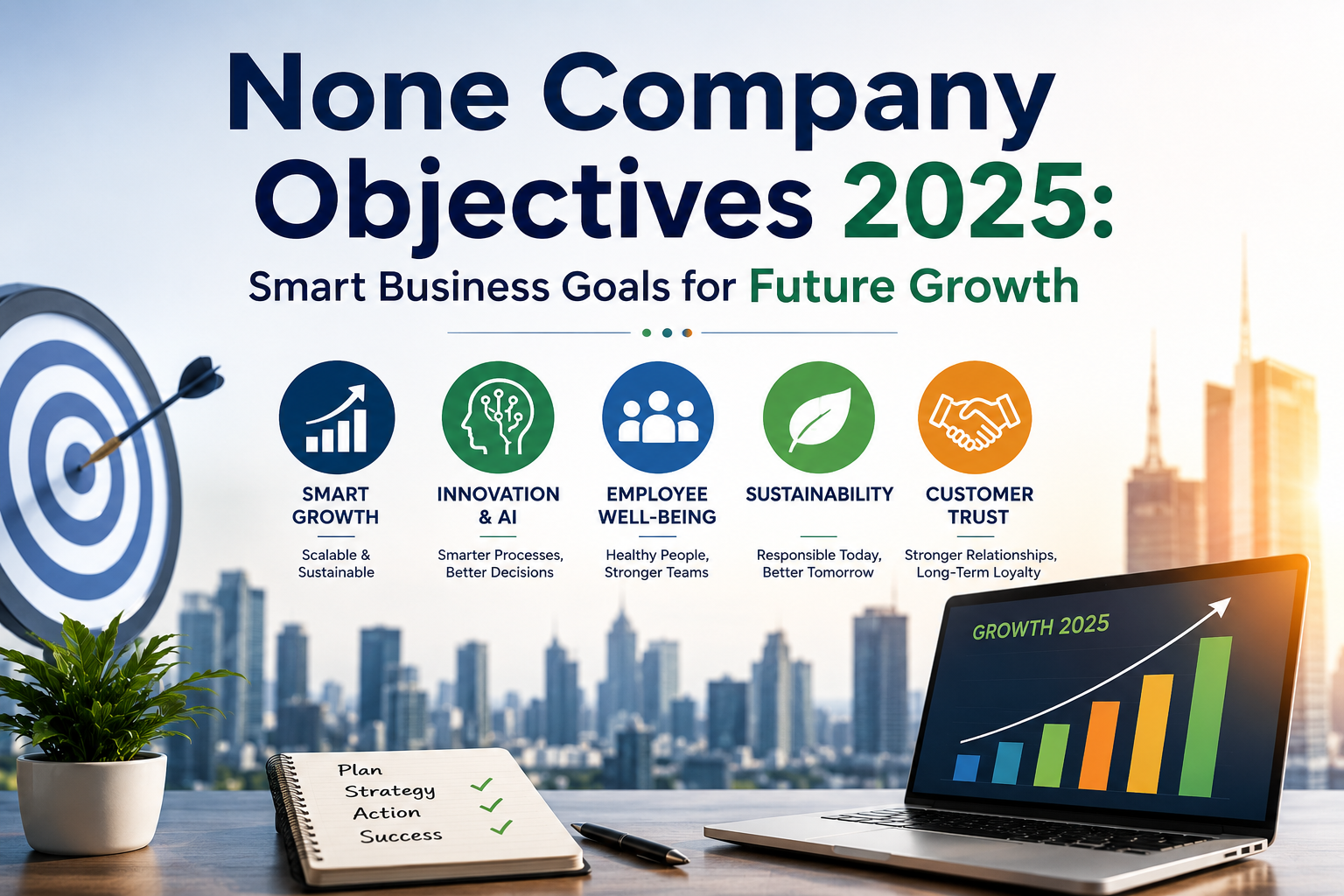
Business planning is changing rapidly as organizations adapt to new technologies, shifting workforce expectations, and evolving customer demands. None Company Objectives 2025 reflects a modern approach to setting business goals that are flexible, technology-driven, and designed for long-term success. Companies are no longer focused only on revenue growth or market expansion. Modern organizations are increasingly balancing profitability with sustainability, employee well-being, innovation, and customer trust. Businesses that build future-ready objectives today are more likely to remain competitive in the years ahead.
The business landscape of 2025 presents unique challenges and opportunities. Artificial intelligence continues to reshape industries, digital transformation influences operational models, and consumers increasingly expect ethical and transparent business practices. Organizations that create adaptable objectives often position themselves more effectively for long-term growth. Understanding how company objectives evolve helps leaders develop stronger strategies for sustainable business performance.
What Does None Company Objectives 2025 Mean?
None Company Objectives 2025 represents a forward-thinking framework for business planning that emphasizes adaptability, innovation, and long-term resilience. Traditional objectives often focused heavily on financial targets, sales growth, and operational efficiency. While those priorities still matter, businesses now recognize that sustainable success requires broader strategic thinking.
Modern objectives include multiple dimensions of organizational growth. Companies increasingly integrate technology adoption, employee development, environmental responsibility, and customer experience into their planning models. Instead of measuring success only through short-term financial performance, organizations evaluate how effectively they prepare for future market conditions.
For example, a technology startup planning expansion in 2025 may set objectives beyond increasing annual revenue. Leadership teams might establish goals related to artificial intelligence integration, employee retention improvement, customer satisfaction enhancement, and sustainability initiatives. These broader objectives create stronger long-term business foundations.
Why Business Objectives Are Changing in 2025
Business goals are evolving because markets are changing faster than ever before. Economic uncertainty, remote work expansion, automation, and changing customer behavior force organizations to rethink traditional planning methods. Companies that remain rigid often struggle when unexpected market shifts occur.
Consumer expectations also influence business objectives significantly. Customers increasingly support brands that demonstrate transparency, ethical leadership, and social responsibility. Organizations that prioritize trust-building often strengthen long-term customer loyalty while improving brand reputation.
Workforce expectations represent another major factor shaping company objectives in 2025. Employees increasingly value flexibility, professional development opportunities, and workplace well-being. Businesses focusing only on productivity metrics may experience higher turnover rates and reduced employee engagement.
Modern leaders recognize that business resilience requires balancing financial growth with adaptability. Objectives now increasingly include innovation readiness, technology adoption, workforce development, and sustainability planning. This broader perspective helps organizations prepare for future challenges while maintaining a competitive advantage.
How AI and Digital Transformation Shape Modern Company Goals
Artificial intelligence and digital transformation play increasingly important roles in shaping organizational priorities. Businesses across industries adopt intelligent systems to improve efficiency, strengthen decision-making, and create better customer experiences. Companies building technology readiness into their objectives often gain operational advantages over competitors.
Digital transformation extends beyond software upgrades or automation tools. It involves redesigning business processes to improve agility and responsiveness. Organizations incorporating digital strategies into long-term planning position themselves more effectively for market evolution.
Smarter Decision-Making with Data
Data-driven decision-making has become essential for modern businesses. Organizations collect valuable insights from customer interactions, operational performance metrics, and market trends. Artificial intelligence helps leaders analyze information faster and identify patterns that support better planning decisions.
Retail companies provide strong examples of data-driven objectives in action. Businesses use predictive analytics to forecast demand, optimize inventory management, and personalize customer experiences. These capabilities improve efficiency while supporting stronger strategic planning.
A company objective in 2025 may include building a stronger analytics infrastructure or improving real-time reporting capabilities. These goals strengthen business intelligence and enable faster responses to changing market conditions.
Automation and Better Productivity
Automation continues transforming operational efficiency across industries. Businesses increasingly automate repetitive tasks to improve productivity and reduce manual workloads. Customer support systems, inventory tracking, financial reporting, and marketing operations often benefit from intelligent automation.
Organizations using automation strategically can redirect employee efforts toward higher-value activities. Rather than replacing people entirely, many businesses use technology to strengthen workforce effectiveness. This balance creates opportunities for innovation while improving operational performance.
For example, customer service teams increasingly use AI-powered support tools to handle routine inquiries. Employees then focus on complex customer needs that require human problem-solving skills. Objectives built around productivity enhancement often create stronger long-term outcomes.
Flexible Planning for Fast Market Changes
Modern business environments require greater planning flexibility than previous decades. Long-term plans remain important, but organizations increasingly build adaptable strategies that allow faster responses to disruption. Agile planning models help businesses adjust priorities without losing strategic direction.
Companies adopting flexible planning frameworks often create objectives tied to learning, experimentation, and continuous improvement. Instead of rigid annual planning systems, leaders increasingly evaluate performance regularly and refine priorities as market conditions evolve.
Technology companies commonly demonstrate this approach. Product development teams frequently adjust roadmaps based on customer feedback, competitive trends, and emerging technologies. Flexible objectives help organizations remain resilient during uncertainty.
The Role of Sustainability, Employee Well-Being, and Customer Trust
Modern business objectives increasingly extend beyond financial performance to include broader organizational responsibilities. Sustainability initiatives have become central planning priorities for companies seeking long-term growth opportunities. Organizations reducing waste, improving energy efficiency, and supporting environmental responsibility often strengthen brand perception while reducing operational risks.
Employee well-being also plays a growing role in business strategy. Companies increasingly recognize that engaged employees contribute directly to productivity, innovation, and customer satisfaction. Objectives related to workplace flexibility, learning opportunities, and mental well-being support stronger organizational performance.
Customer trust remains another defining factor shaping company objectives in 2025. Consumers increasingly evaluate businesses based on transparency, privacy protection, ethical practices, and reliability. Organizations investing in trust-building strategies often strengthen customer retention and long-term loyalty.
Several common future-focused priorities now appear within business planning:
- Sustainable operational practices
- Employee experience improvement
- Digital trust and cybersecurity investment
- Diversity and inclusion initiatives
- Long-term customer relationship development
Businesses combining these priorities with financial performance objectives often create stronger long-term strategic foundations.
None Company Objectives 2025 vs Traditional Business Goals
Traditional business goals primarily emphasized growth metrics such as revenue increases, market expansion, and cost reduction. While these metrics remain important, modern objectives adopt a broader perspective that accounts for evolving business realities.
Traditional planning approaches often relied heavily on fixed long-term forecasts. Modern organizations increasingly favor flexible strategies that accommodate rapid market change. Technology readiness, workforce development, and resilience planning now influence objective-setting processes more heavily.
Another key difference involves stakeholder focus. Traditional models often prioritized shareholders primarily. Contemporary planning increasingly balances shareholder expectations alongside employee satisfaction, environmental responsibility, and customer trust.
A manufacturing company in previous years might have focused heavily on production output targets. A modern version of the same organization may combine production objectives with sustainability initiatives, employee safety improvements, and automation readiness planning. This broader perspective strengthens long-term resilience.
How Companies Can Build Stronger Objectives for the Future
Building stronger business objectives requires strategic alignment between leadership priorities and future market realities. Organizations should begin by evaluating industry trends, customer expectations, workforce needs, and technological developments influencing long-term growth.
Companies can strengthen planning processes through several practical approaches:
- Define measurable goals connected to the broader organizational vision
- Build technology adoption into long-term planning
- Develop workforce support and employee development strategies
- Create contingency plans for market uncertainty
- Monitor performance continuously and adjust objectives when needed
Cross-functional collaboration also improves objective development. Leadership teams, employees, and operational departments often provide valuable perspectives that strengthen planning quality. Objectives developed collaboratively frequently achieve stronger organizational alignment.
Organizations should avoid overly rigid planning structures. Business conditions evolve continuously, making adaptability increasingly valuable. Companies building flexibility into objectives position themselves more effectively for sustainable success.
Final Thoughts: Creating Business Goals That Stay Relevant Beyond 2025
None Company Objectives 2025 reflects an important shift toward modern, adaptable business planning. Organizations increasingly recognize that future growth depends on more than financial performance alone. Technology readiness, sustainability efforts, employee well-being, and customer trust now shape long-term business success.
Artificial intelligence, automation, and digital transformation will continue influencing organizational priorities in the coming years. Businesses building flexible, future-focused objectives today create stronger foundations for tomorrow. Leaders who balance innovation with resilience planning often strengthen long-term competitiveness while preparing organizations for evolving market demands.
Companies that embrace forward-thinking strategies position themselves more effectively for growth opportunities beyond 2025. Strong objectives create direction, improve adaptability, and support sustainable success in increasingly dynamic business environments.
FAQs
1. What are None Company Objectives 2025?
None Company Objectives 2025 refers to a future-focused approach to business planning that combines financial growth with innovation, sustainability, employee well-being, and customer trust.
2. Why are business goals changing in 2025?
Business goals are evolving because technology advances rapidly, workforce expectations shift, and customers increasingly expect ethical and transparent business practices.
3. How does AI influence company objectives?
Artificial intelligence supports better decision-making, productivity improvement, automation, and long-term strategic planning within organizations.
4. Why is employee well-being becoming a business priority?
Employee well-being influences engagement, productivity, retention, and workplace performance, making it increasingly important within long-term planning strategies.
5. How can companies prepare objectives for future business growth?
Organizations can strengthen future objectives by building flexibility, technology readiness, sustainability initiatives, and customer trust strategies into long-term planning.
